
Reviewed · SANTO DOMINGO & THE COLONIAL ZONE
Zona Colonial: Recorrido Histórico con Chocolate y Mamajuana
Santo Domingo’s Colonial Zone rewards a slow walk. This guided route strings together major Spanish-era landmarks and Dominican-history stops, so you’re not just seeing buildings—you’re getting the human story behind them, especially at the Alcázar de Colón and the Colonial Zone streets. I especially like how the tour keeps you moving between sites without feeling rushed, and how it’s compact enough to fit into a first-day itinerary. One heads-up: the route details don’t spell out any specific chocolate or mamajuana moments, so if that’s the main reason you booked, I’d confirm with the guide ahead of time.
For the price—about $5 per person—you’re paying for a guided walk that touches multiple named sights in the center of Santo Domingo. The downside is that the tour focuses more on what you can see at each location than on deeper political context, so you may want extra reading or questions if you’re chasing the full independence story.
If you come with comfortable shoes and a camera, you’ll leave with better bearings in the Colonial Zone and a clearer sense of why these places matter.
In This Review
- Key things to know before you go
- A 2-hour loop through the heart of Colonial Santo Domingo
- Meeting at the Sundial: get your bearings fast
- From the Chapel of Our Lady of Remedies into “Spanish stone” mode
- Museum of the Royal Houses and Plaza España: power and presence
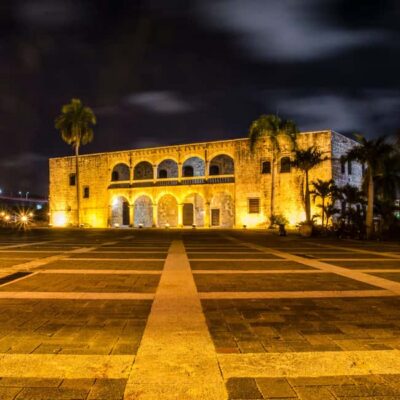
- Alcázar de Colón: why governors’ homes still feel “big”
- Wax museum and Nicolás de Bari Hospital: people in the storyline
- Calle El Conde and Parque Colón: see the city beyond monuments
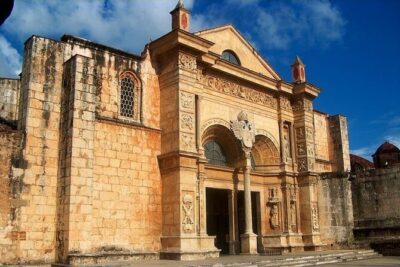
- Primate Cathedral of the Americas: details, scale, and faith
- Price and tickets: what your $5 is really buying
- Who this tour fits best (and who should adjust expectations)
- Should you book Zona Colonial con Chocolate y Mamajuana?
- FAQ
- FAQ
- How much does the Santo Domingo Colonial Zone tour cost?
- How long is the tour?
- Where do I meet the guide?
- What languages are offered for the live guide?
- What’s included in the tour price?
- Are museum tickets included?
- What should I bring?
- Is the tour wheelchair accessible?
- Is there free cancellation?
- Does the tour include chocolate and mamajuana?
Key things to know before you go
- Reloj del Sol meeting point: your guide waits at the Sundial area in front of the Museum of the Royal Houses.
- High value for the price: many major stops covered in a short walk.
- Multiple site types: museums, courtyards, a hospital, a wax museum, plus streets and plazas.
- Cobblestones and walking: bring footwear that handles uneven ground.
- Tickets not included: some museum visits may require you to pay separately.
- Time can run short: the tour is listed at 2 hours, but pacing can vary.
A 2-hour loop through the heart of Colonial Santo Domingo
This is a walking-focused guided tour of Santo Domingo’s most concentrated historic area. You start near the Reloj del Sol and end back near the Chapel of Our Lady of Remedies, with stops that cover architecture, commemorations, and daily-life history.
What makes it practical is the way it groups nearby sites. Instead of piecing together tickets and directions one by one, you get an order that keeps you in the thick of the Zona Colonial without doubling back.
Meeting at the Sundial: get your bearings fast
Your guide meets you at the Reloj del Sol, in front of the Museum of the Royal Houses. The exact coordinates given (18.47559621681003, -69.88294794166414) and the Google Maps link help a lot if you’re navigating by phone.
This matters because the Colonial Zone streets can feel like a maze the first time you arrive. If you’re even a little late, it’s easy to lose the group—so show up a few minutes early and match what the meeting-point description says: the Sundial area in front of the Casas Reales museum area.
The capital deserves a full day. More Santo Domingo runs we rate
- Santo Domingo: Los Tres Ojos, Boca Chica & More
★ 4.8 · 219 reviews - Colonial Zone: Historical Tour with a visit to the Columbus Lighthouse and Tres Ojos Park
★ 4.9 · 157 reviews - Santo Domingo: Colonial Zone Bike Tour
★ 5.0 · 127 reviews - Saona Island, memorable all-inclusive experience, from Santo Domingo.
★ 4.5 · 100 reviews
From the Chapel of Our Lady of Remedies into “Spanish stone” mode
The tour begins at the Chapel of Our Lady of Remedies. From there, the route moves directly into the atmosphere of the Colonial Zone—thick walls, old streets, and landmarks that look like they’ve been sitting in place forever.
Even when you’re standing outside, there’s a lot to notice: layout, materials, and the sheer permanence of how the Spanish colonial center was built. This is a tour where the walking is part of the lesson, because you see how each stop connects to the next.
Museum of the Royal Houses and Plaza España: power and presence
One of the first museum stops is the Museum of the Royal Houses. You’ll walk through spaces where the explanations are tied to what lived there and what those roles meant in colonial life. This is a good fit if you like details you can point to—rooms, objects, and the idea of everyday history in official spaces.
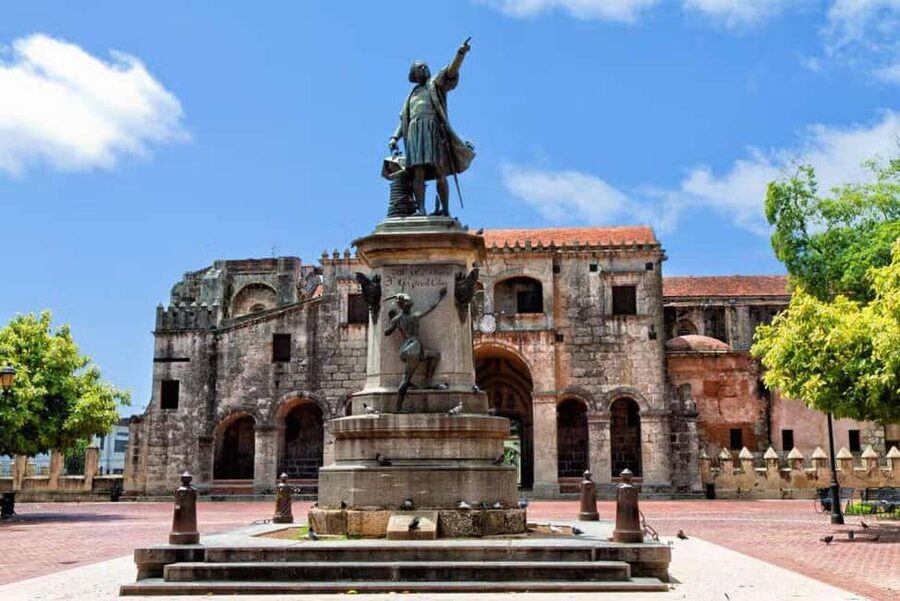
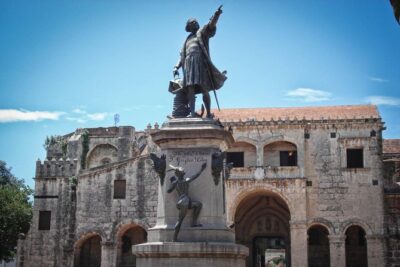
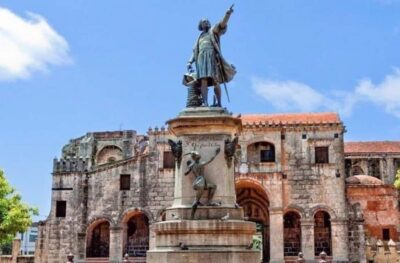
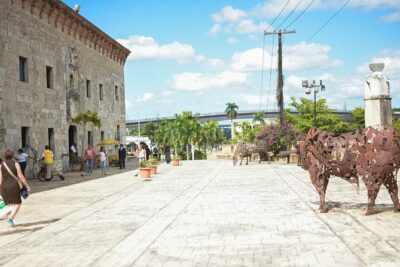
Then you hit Plaza España, an important open square in the same area. The tour highlights the architecture around the plaza and notes it’s home to the famous Christopher Columbus statue—so you get a landmark photo moment without losing the context.
A realistic note: if you want a heavy political lesson at every stop, you might find the commentary more focused on buildings and their function than on big-scale independence debates. You can usually fix that by asking your guide direct questions at a stop, like what changed when colonial control shifted.
Alcázar de Colón: why governors’ homes still feel “big”
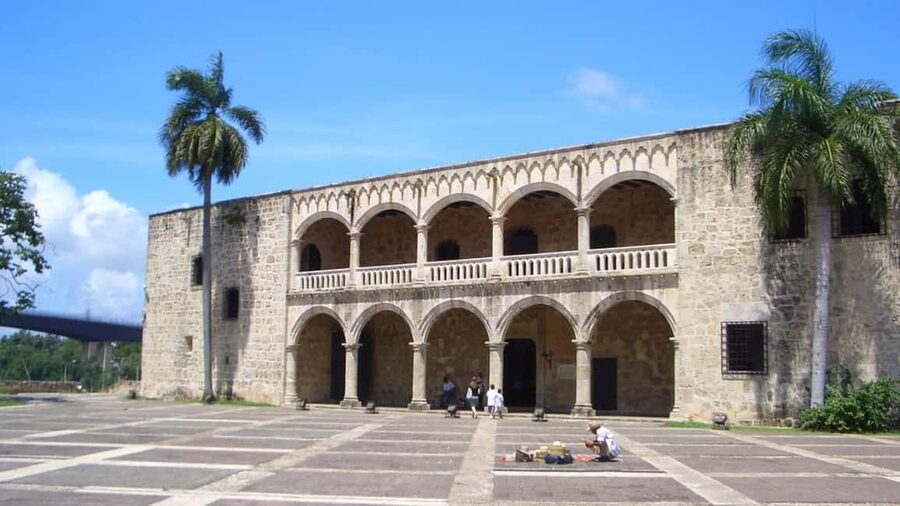
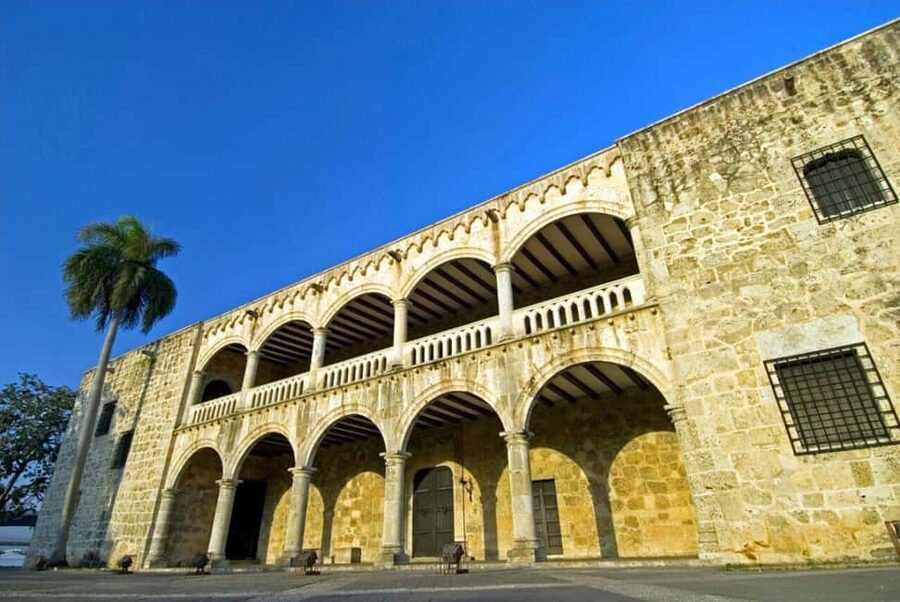
Next up is the Alcázar de Colón. The tour frames it as the residence of the first governors of the Americas, and you can feel the logic of that claim as you move through the site.
This is one of those places where the architecture does the talking: courtyards, hall-like spaces, and the kind of layout that signals authority and wealth. If you’re curious about how power looked in daily space—not just in documents—this stop is one of the most satisfying on the whole walk.
The value here is timing. Because it’s guided, you’re not only admiring details—you’re getting help understanding what you’re looking at, which makes the building feel less like a random old structure and more like a lived environment.
Wax museum and Nicolás de Bari Hospital: people in the storyline
After the architectural heavy-hitters, the tour adds two human-centered stops: the Juan Pablo Duarte Wax Museum and the historic Nicolás de Bari Hospital.
The wax museum uses figures to bring key moments in Dominican history to life, including the independence fight and other cultural milestones. This is useful even if you’ve read a bit already, because it provides a visual timeline you can reference later when you’re wandering on your own.
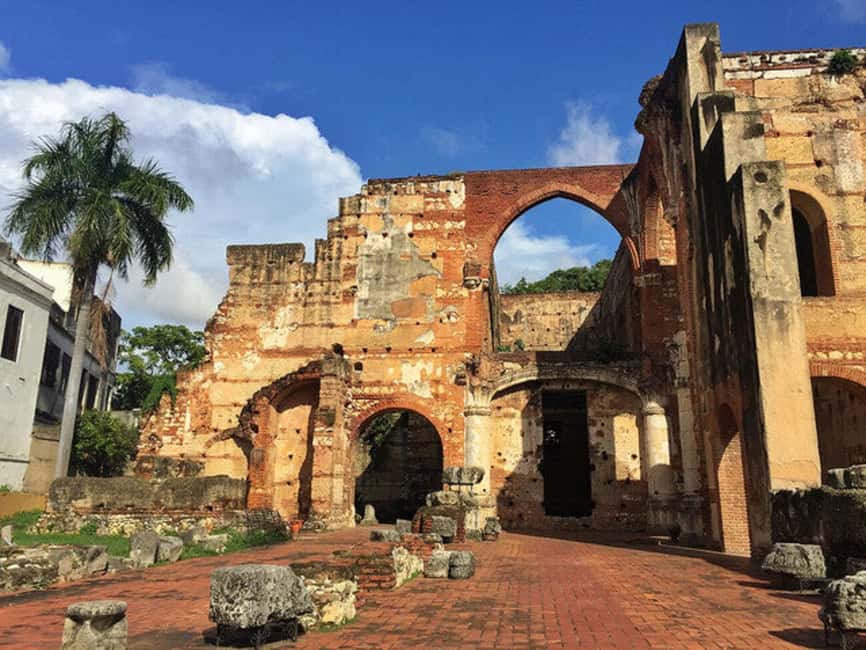
Then comes Nicolás de Bari Hospital, presented as an institution that’s been involved in care and healing for centuries. The tour’s focus here is how medicine and healthcare evolved over time on the island. If you like history that connects to real systems—health, institutions, and change over generations—this stop adds variety beyond the colonial-government theme.
If you prefer your history more strictly political, you’ll want to pair this tour with a museum visit or a longer talk elsewhere. But as a “good first framework,” these two stops help you see more than crowns and flags.

Calle El Conde and Parque Colón: see the city beyond monuments
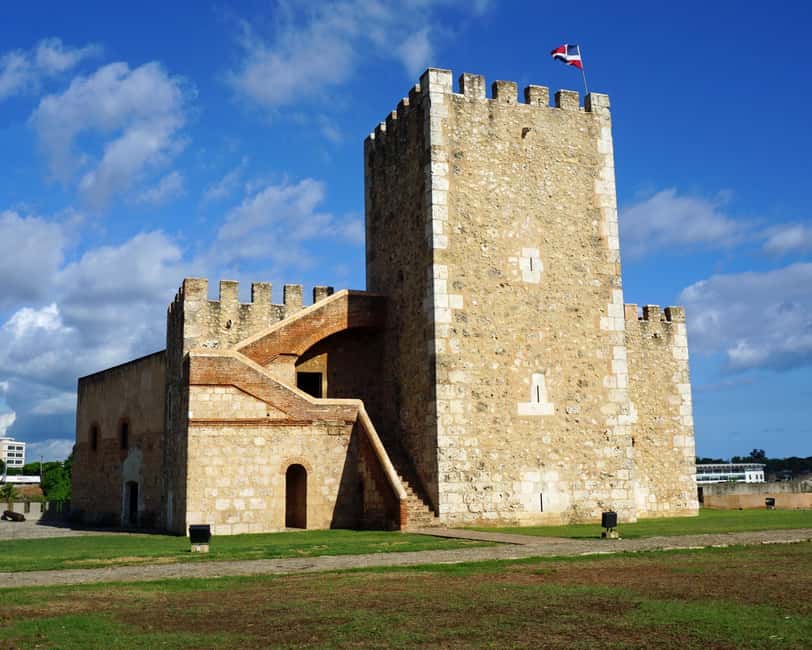
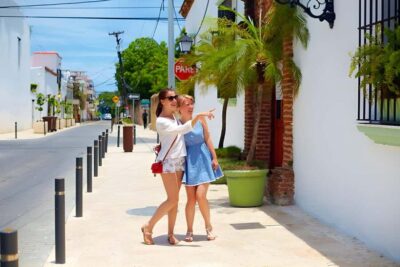
A big part of the payoff is that the tour doesn’t end in museums and cathedrals. You walk along Calle El Conde, described as one of the oldest and liveliest streets in Santo Domingo.
This is where you get the everyday side: shops, restaurants, and street performers. Even if you’re not stopping to buy anything, you’ll understand why people gather here and how the Colonial Zone still works as a real neighborhood—not a museum set.
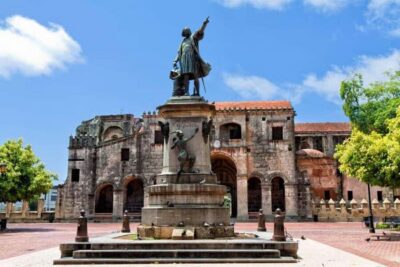
Then the tour pauses at Parque Colón. It’s positioned as a quieter spot to rest and admire the explorer’s statue. Think of this as your breather between major sites, and a moment to reset before you go into the cathedral area.
Primate Cathedral of the Americas: details, scale, and faith
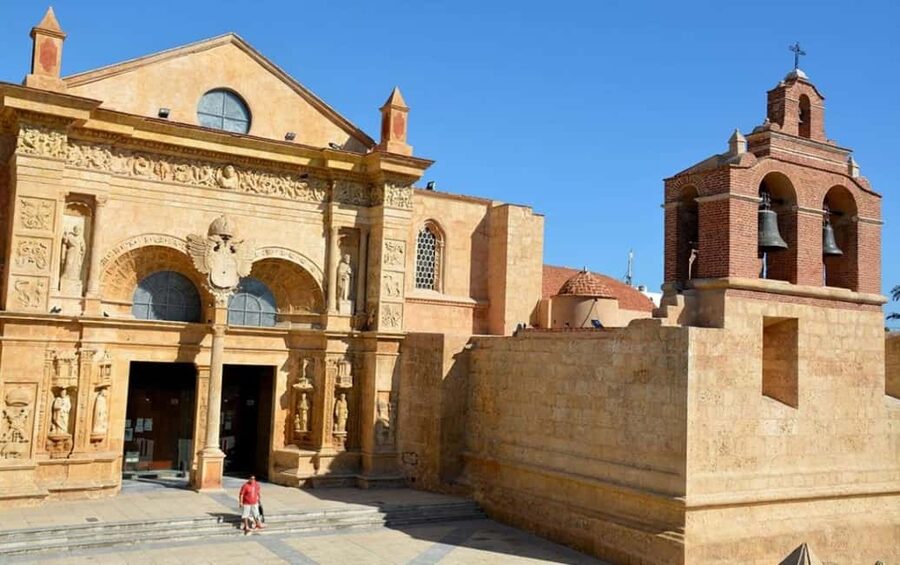
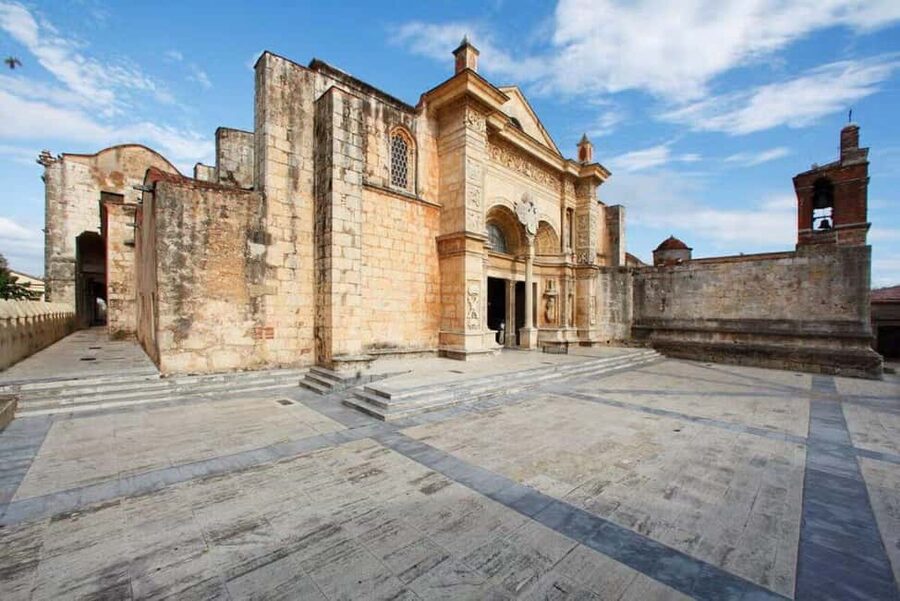
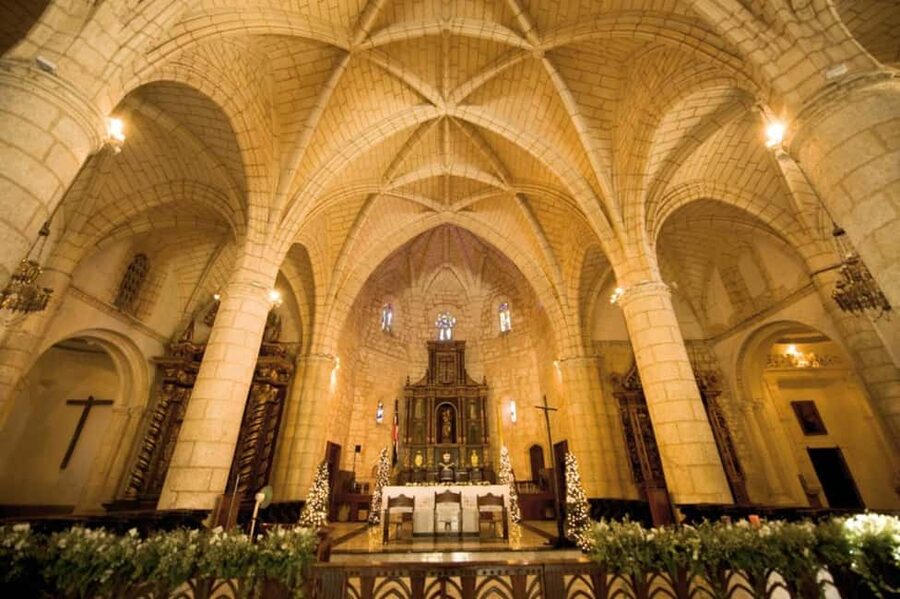
The final major stop is the Primate Cathedral of the Americas. The tour describes it as an architectural gem with centuries of faith and devotion behind it, and when you arrive, you can see why the site matters beyond just tourism.
What I like about ending here is the emotional shift. After buildings and streets, the cathedral pulls the day into something more reflective—details, scale, and symbolism. It’s a strong way to close because it leaves you with an enduring image, not just a checklist.
Price and tickets: what your $5 is really buying
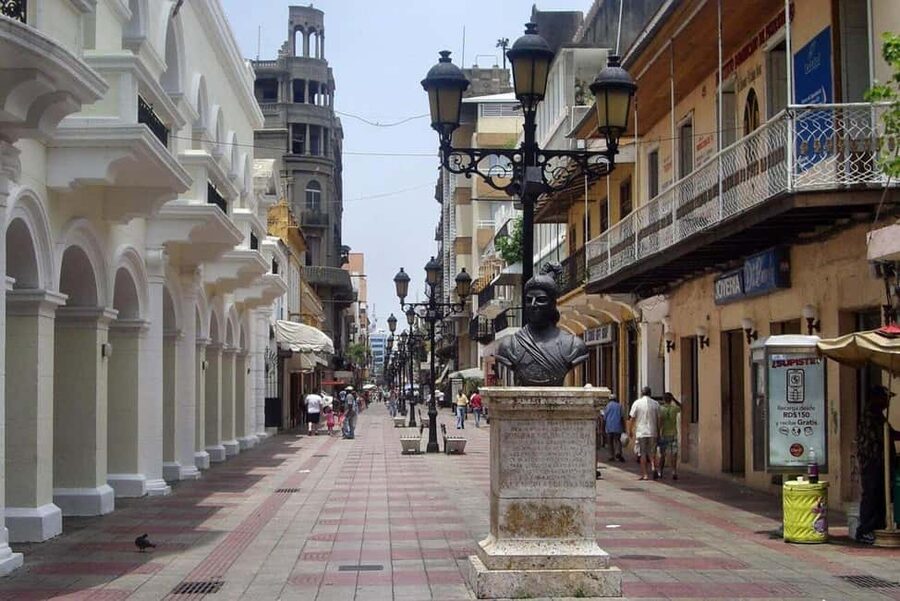
At $5 per person, this tour is priced like a local-value guided walk. You’re not just paying for someone to lead you—you’re paying for someone to connect the sights into a story while you save time on planning.
The catch is that museum tickets are not included. That means you should be ready for additional costs depending on which entrances require payment during your visit. For fair value, build a little extra budget for ticket time, and don’t rely on the $5 figure alone to cover everything.
Also note the tour is listed at 2 hours, but the pacing can be quicker depending on the group and how the guide manages entry times. If you have another plan right after your tour, give yourself a buffer.
Who this tour fits best (and who should adjust expectations)
This works best for:
- First-timers who want an efficient overview of the Colonial Zone
- People who like guided explanations at historic sites more than independent wandering
- Visitors comfortable with walking on uneven streets
It might not be ideal for:
- Anyone who needs deep political history at every stop (the route is more visual and site-based)
- People who book specifically for chocolate and mamajuana and expect it to show up as a named activity (the details provided focus on the listed sites, so confirm)
- Wheelchair users, since it isn’t suitable for accessibility needs noted for the tour
One small but meaningful detail from the feedback: guides can make the day feel alive. A guide named Fernando is specifically credited as great, so if you see his name in your booking, that’s a good sign.
Should you book Zona Colonial con Chocolate y Mamajuana?
If you want a low-cost, high-efficiency guided walk through the Colonial Zone—Museum of the Royal Houses, Alcázar de Colón, Plaza España, Calle El Conde, and the Primate Cathedral—this is an easy yes. For $5, the itinerary hits a lot of recognized landmarks without requiring you to figure out logistics block by block.
If your main motivation is the chocolate and mamajuana named in the tour title, I’d treat this as a question to ask before you go. The tour details you have here emphasize monuments, museums, and streets, not a specific tasting or stop. Confirming that one point protects your expectations.
FAQ
FAQ
How much does the Santo Domingo Colonial Zone tour cost?
It’s listed at $5 per person.
How long is the tour?
The duration is listed as 2 hours. Starting times depend on availability.
Where do I meet the guide?
Meet at the Reloj del Sol (Sundial), in front of the Museum of the Royal Houses.
What languages are offered for the live guide?
The guide provides the tour in English, French, and Spanish.
What’s included in the tour price?
The guided tour includes visits to the Museum of the Royal Houses, Plaza España, Alcázar de Colón, Juan Pablo Duarte Wax Museum, Nicolás de Bari Hospital, plus walking along Calle El Conde, visiting Parque Colón, and visiting the Primate Cathedral of the Americas.
Are museum tickets included?
No. Museum tickets are listed as not included.
What should I bring?
Bring comfortable shoes, a camera, sunscreen, and water.
Is the tour wheelchair accessible?
No, it’s not suitable for wheelchair users.
Is there free cancellation?
Yes. You can cancel up to 24 hours in advance for a full refund.
Does the tour include chocolate and mamajuana?
The tour title includes chocolate and mamajuana, but the provided tour details focus on the listed historic stops and don’t describe a specific chocolate or mamajuana activity. It’s smart to confirm the expectation with the guide before you start.
More Tour Reviews in Santo Domingo

Deeper into the Colonial Zone
New Santo Domingo reviews, straight off the island
- Santo Domingo Colonial Zone City Tour★ 3.1 · 3 reviews
- “Private Airport Transfer from Santo Domingo (SDQ)”★ 3.5 · 3 reviews
- Santo Domingo to La Romana transfer★ 5.0 · 3 reviews
- A Private day in the First city of the Americas: Santo Domingo★ 5.0 · 3 reviews
- Santo Domingo: Paradisiac Waterfall & Lunch Cooked Over Wood★ 5.0 · 3 reviews
- Santo Domingo: Guided City Tour with Lunch★ 4.9 · 3 reviews
Santo Domingo & the Colonial Zone, compared.
 ★ 4.5Full-Day Santo Domingo City Tour from Punta CanaFrom $954,500 reviews
 ★ 3.5Day Trip to Santo Domingo from Punta CanaFrom $55659 reviews
 ★ 3.8Santo Domingo Day Trip with Tickets and LunchFrom $82584 reviews
 ★ 4.1All Inclusive Santo Domingo Full-Day City TourFrom $70553 reviews
 ★ 4.8Santo Domingo: Los Tres Ojos, Boca Chica & MoreFrom $87219 reviews
 ★ 4.0Historical Santo Domingo Day Trip from Punta CanaFrom $95176 reviews
 ★ 4.9Colonial Zone: Historical Tour with a visit to the Columbus Lighthouse and Tres Ojos ParkFrom $5157 reviews
 ★ 3.6From Bavaro: Santo Domingo Colonial City TourFrom $85129 reviews
Browse the lists this tour appears in