
Reviewed · SCUBA DIVING
3 Days Open Water Diving Course in Punta Cana
Clear water beats classroom every time. This 3-day PADI Open Water course in Punta Cana mixes online theory, confined-water skill work, and four guided open-water training descents to 18 meters, so you’re building real confidence fast. I especially liked the small group feel (maximum 8 students), and I found the instructor support strong thanks to the teaching style of Kelvin, Franklin, Gilberto, and George. One thing to consider: you’ll need to handle a medical questionnaire before you get in the water, and the schedule can shift with weather.
You also get practical help that matters on a vacation: pickup is offered, and you’ll use a mobile ticket. The overall setup is built for people with moderate physical fitness, not for couch-to-scuba emergencies. If you’re prone to motion sickness or panic in water, plan extra time to prepare mentally and ask questions early.
In This Review
- Key things I’d remember before booking
- Punta Cana’s “learn scuba” setup: why this place works
- The course flow over 3 days: theory, pool skills, open water
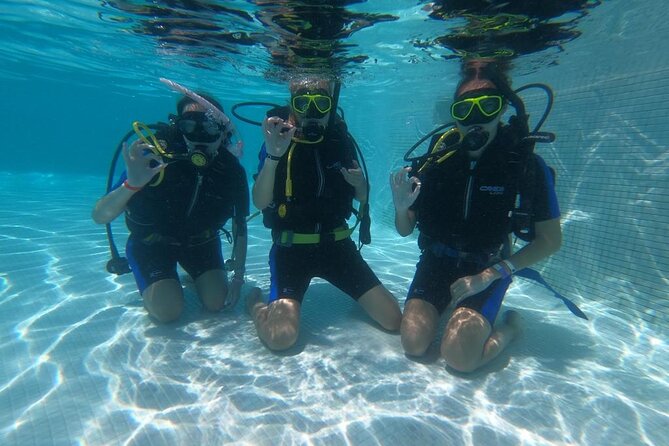
- Confined water in the pool: where confidence is built
- Open-water training descents in Punta Cana: reefs and a wreck
- Instructor support: what names like Kelvin and Franklin tell you
- Depth limit and safety reality: 18 meters, clear expectations
- Price and value: what $490 gets you in Punta Cana
- Timing, schedule, and what the day feels like
- Who should book this course (and who might reconsider)
- Should you book this Punta Cana open-water course?
- FAQ
- How long is the course?
- What is the maximum depth you train to?
- What parts does the course include?
- How many open-water descents are included?
- Is pickup offered?
- Do I need to complete a medical questionnaire?
- Is there a physical fitness requirement?
- What are the operating hours, and what happens if weather is poor?
Key things I’d remember before booking
- Small group size (max 8 students) means more feedback and less waiting around
- 4 open-water training descents give you real practice under supervision
- Online dive theory + pool skills build safety and confidence before you go out
- 18-meter / 60-foot max depth limit gives you a clear, instructor-led target
- Reef and wreck options like the Monica wreck can show you variety in one course
- PADI instructors including Kelvin and Franklin are part of what makes the teaching feel supportive
Punta Cana’s “learn scuba” setup: why this place works
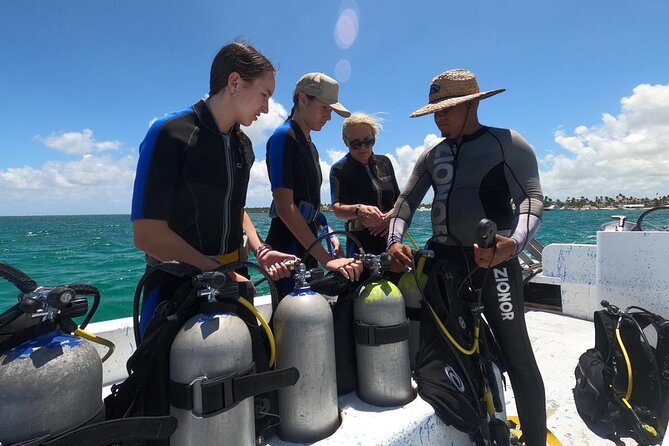
Punta Cana is one of those destinations where training feels easier than you’d expect. The water is clear, the ocean has plenty of marine life to look at, and the sites are set up for guided learning rather than “figure it out yourself” chaos. That matters because the best scuba progress comes when you can focus on skills, buoyancy, and calm breathing—not when you’re fighting stress.
What I liked most is that the course is structured like a real learning ladder. You don’t jump straight to open water. You build up in confined water first, then you step into the real thing with instructors right there with you. And when open-water sessions happen, you’re doing supervised descents with a clear depth goal: 18 meters / 60 feet.
You’ll also like the fact that this is run by Grand Bay Of The Sea, a school with a team students clearly trust. In the feedback I saw, Kelvin, Franklin, Gilberto, and George were repeatedly mentioned in a positive way for making people feel supported and comfortable—especially people doing their first certification.
The course flow over 3 days: theory, pool skills, open water
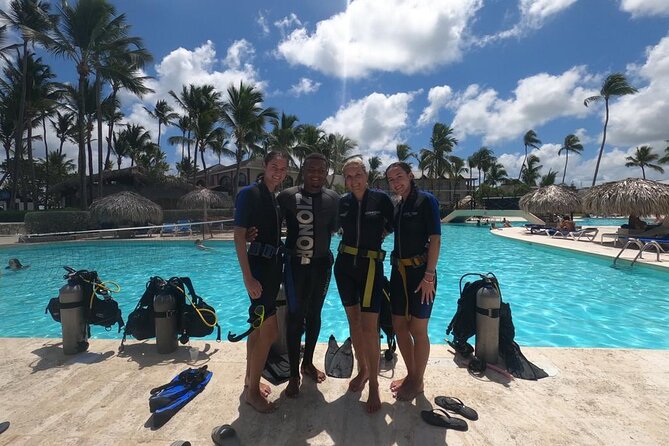
The course format is straightforward, and that’s a good thing when you’re on a short vacation. It runs for about 3 days and is made up of three sections:
1) Online dive theory
2) Confined swimming pool sessions
3) 4 open-water training descents (with a max depth of 18 meters / 60 feet)
Here’s how that usually translates into your experience. First, you complete the theory portion online, which is where you’ll learn the core concepts behind safe scuba use: equipment basics, safety procedures, and dive physics. The advantage is that you can fit this into your trip pace instead of being locked into a full-day classroom schedule.
Then you move into confined water. This is where you practice the “hands and head” skills that keep you safe later—things like equipment handling and controlled breathing while learning how to stay stable underwater. Pool sessions also give you a way to ask questions without the added pressure of waves, currents, or depth.
Finally, the course takes you into open water for four guided descents. This part is where you get to apply what you practiced. The goal isn’t only seeing fish and coral (though that’s a big reason people come). It’s also getting comfortable with underwater awareness: buoyancy control, buddy awareness, and the simple routines that keep your breathing steady.
The Punta Cana catalogue runs deep. More picks we have vetted
- Private Airport Punta Cana to La Romana Bayahibe or Casa de Campo Resort Area
★ 5.0 · 6,662 reviews - Punta Cana Zipline Adventure with Buggies and Horseback Riding
★ 5.0 · 5,001 reviews - Full-Day Santo Domingo City Tour from Punta Cana
★ 4.5 · 4,500 reviews - Punta Cana: Catamaran Boat to Saona Island with Buffet Lunch
★ 4.4 · 3,822 reviews
Confined water in the pool: where confidence is built
Confined-water practice is the make-or-break part of any “learn the basics” course. If it’s done well, you come out calmer and more in control. If it’s rushed, you feel lost the moment you’re in real conditions.
In this course, pool time is used to refine essential skills in a controlled environment. That’s a big deal for first-timers because it lets you:
- get comfortable with how your gear feels when you’re properly set up
- practice basic underwater movement and stabilization
- learn safety routines without worrying about open-water variables
I like courses that treat pool work as skill-building, not just a box to check. With the instruction style credited to teams like Kelvin and Franklin, the teaching tone tends to be patient and thorough—exactly what you want when your brain is trying to handle new equipment, new signals, and a whole new environment at once.
If you’re the kind of person who needs repetition to feel confident, this setup works in your favor. You’re not expected to be perfect from minute one. You’re expected to practice until things click.
Open-water training descents in Punta Cana: reefs and a wreck
Once pool skills are solid, you step into open water for your four supervised descents. Punta Cana is known for clear, turquoise water and underwater visibility that makes learning easier. You’ll get to see coral areas with tropical fish, and depending on conditions, you may also visit a wreck site.
One detail that stood out in the feedback is the possibility of a shipwreck outing, including the Monica wreck. Pair that with reef diving, and your course gets a nice mix:
- reef time for living coral and schools of tropical fish
- wreck time for structure, texture, and a different underwater viewpoint
Why this matters for a course like this: learning improves when your brain stays engaged. When you have something interesting to look at (coral, fish, the shape of a wreck), you tend to slow down, breathe better, and focus on stability. It turns practice into a real experience instead of a checklist.
Do note that open-water conditions depend on weather. Even if you’re excited, the school’s job is safety first—so you may get a schedule shift if conditions aren’t right.
Instructor support: what names like Kelvin and Franklin tell you
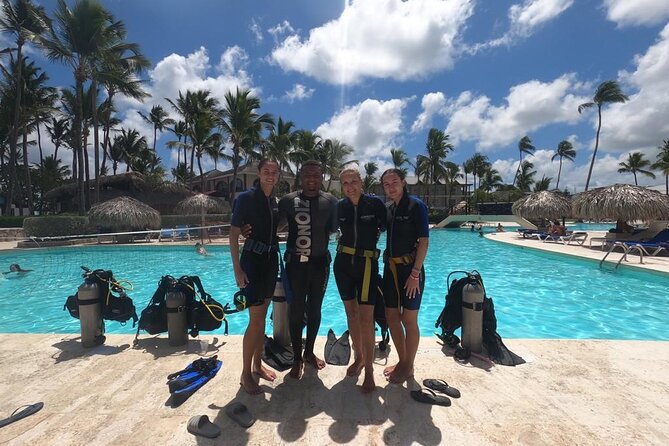
Good instruction is the difference between I did it and I can do this. The teaching style credited in the feedback is heavily focused on support and clear explanations. Kelvin and Franklin appear as instructor/manager figures tied to great experiences, along with Gilberto and George as teachers who helped people feel ready.
Here’s what that kind of team dynamic often means in practice:
- you’ll get guidance that’s not vague
- you’ll have time to ask questions
- you’ll feel less rushed during skill checks
- you’ll have someone watching your comfort level, not just your technique
If you’re nervous about water or you’re new to scuba, this is the part you should care about most. The course is only a few days long, so the faster you understand what your instructor wants, the faster you’ll enjoy the ocean.
Depth limit and safety reality: 18 meters, clear expectations
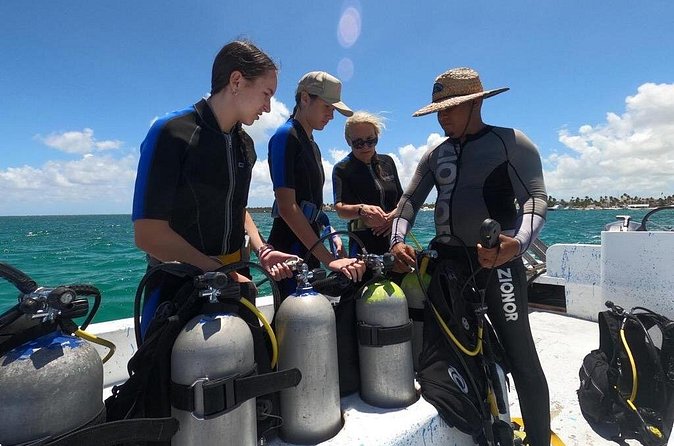
The course sets a clear max depth: 18 meters / 60 feet anywhere in the world. That limit is important because it defines what you’re training toward. Your instructors will guide you within that range, and the course structure is built around keeping you safe as you learn.
You’ll also complete a medical questionnaire before participating. That’s not paperwork for paperwork’s sake. It helps the staff evaluate whether scuba is safe for you, and it’s part of responsible training.
One practical consideration: try to arrive in a calm, rested mindset. Even if you’re fit, being overly tired or anxious can make learning harder. Your goal during these days is not just to follow directions—it’s to build habits. Good habits come easier when you’re well rested.
More Punta Cana dive trips, logged and rated
Price and value: what $490 gets you in Punta Cana
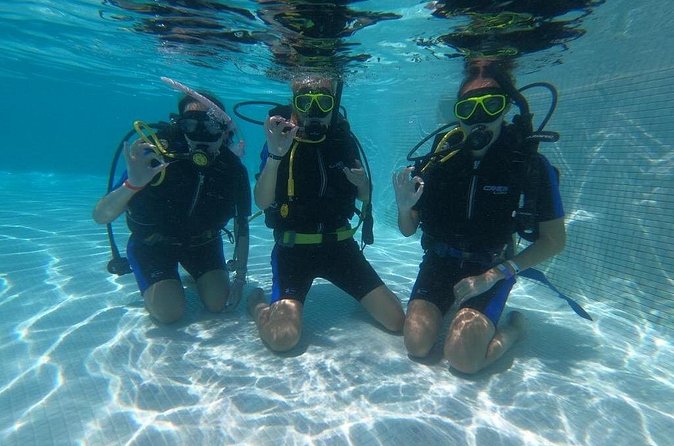
At $490 per person, this course can be good value if you’re looking for a complete path to open-water certification-type training rather than a one-off experience. For that price, you’re getting:
- online theory instruction
- confined-water pool sessions
- four open-water training descents
- instructor guidance throughout
You’re also getting extras that often cost extra elsewhere: pickup is offered, and there’s a mobile ticket for smoother on-the-day logistics. The school also caps the group at 8 travelers, which can reduce the “wait and watch” problem that sometimes comes with larger classes.
One more value angle: the course is designed to take you from basics to safe, supervised open-water performance within a tight timeline. If you’re short on days in Punta Cana, that matters. You’re not stretching learning across a long schedule.
Timing, schedule, and what the day feels like
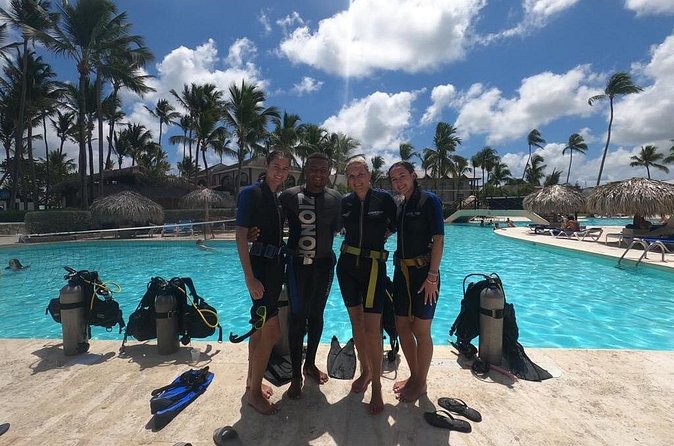
This experience runs with opening hours listed as 8:30 AM to 5:00 PM, Monday through Saturday. That’s a wide window, but don’t expect everything to happen exactly like a clockwork factory. Ocean conditions, training progress, and comfort levels affect how the day plays out.
Also, because this is weather-dependent, you should plan your Punta Cana days with a little flexibility. If the school cancels due to poor weather, you’ll be offered either a different date or a full refund—so you won’t be stuck, but you should still keep your plans adjustable.
In a 3-day course, the vibe is usually a mix of calm classroom learning (online theory), focused skill practice (pool), and then hands-on ocean training. The best part is that you can often feel measurable progress each day—especially if you listen to feedback and practice the same skills again with a calmer mindset.
Who should book this course (and who might reconsider)
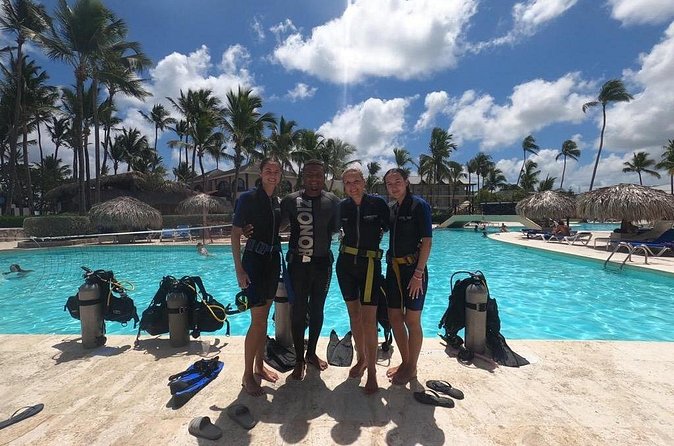
This course fits best if you:
- want a structured 3-day PADI Open Water training plan
- enjoy hands-on learning with instructors watching your technique
- like the idea of seeing both reef life and a wreck site like the Monica wreck
- want small-group attention (max 8)
It may be less ideal if:
- you’re not comfortable completing a medical questionnaire process
- you struggle with water anxiety and won’t ask for extra reassurance
- you can’t handle schedule changes when weather turns
The good news is that the teaching style tied to the staff names mentioned above seems built for first-timers. People reported feeling supported and taught thoroughly, which is exactly what you want when you’re learning the fundamentals.
Should you book this Punta Cana open-water course?
If you want to earn real comfort in the water in a short timeframe, I think this booking is worth serious consideration. The reasons are practical: the training is clearly structured (online theory, pool skills, four open-water training descents), you get small-group attention, and the instructor team—named in feedback like Kelvin and Franklin—has a reputation for making people feel at ease and supported.
I’d book it when you can give yourself a little flexibility for weather and you’re willing to do the medical questionnaire honestly. If you do those two things, the odds are good you’ll come away with both skills and a real love for what you saw underwater in Punta Cana.
If you’re aiming for an all-in-one course that goes beyond a quick experience and turns you into someone who can handle open water safely, this one makes sense.
FAQ
How long is the course?
It runs for 3 days (approx.).
What is the maximum depth you train to?
You can go to a maximum of 18 meters / 60 feet.
What parts does the course include?
The course includes online dive theory, confined swimming pool sessions, and 4 open-water training descents.
How many open-water descents are included?
There are 4 open-water training descents as part of the 3-day program.
Is pickup offered?
Yes, pickup is offered.
Do I need to complete a medical questionnaire?
Yes, a medical questionnaire applies to ensure a safe diving/scuba experience.
Is there a physical fitness requirement?
Travelers should have a moderate physical fitness level.
What are the operating hours, and what happens if weather is poor?
Hours are listed as 8:30 AM to 5:00 PM (Monday to Saturday). The experience requires good weather; if it’s canceled due to poor weather, you’ll be offered a different date or a full refund.
Diving Punta Cana, Tank by Tank
More Tour Reviews in Punta Cana



Punta Cana, Past the Obvious
New Punta Cana reviews, straight off the island
- Horseback Riding on the Beaches of Punta Cana★ 5.0 · 4 reviews
- Punta Cana: Macao Beach and Cenote Buggy Adventure★ 3.8 · 4 reviews
- Full Day Tour, #1 Jet Ski in miches las canitas From Punta Cana★ 3.0 · 4 reviews
- 3 Days Open Water Diving Course in Punta Cana★ 5.0 · 4 reviews
- Private Transfer Punta Cana Airport to/from Grand Palladium Palace Punta Cana★ 5.0 · 4 reviews
- Half-Day Tour 2-in-1, Redonda Mountain & Horseback Riding Tour in Macao Beach★ 4.0 · 4 reviews
Scuba Diving, compared.
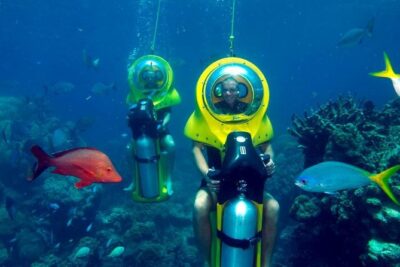 ★ 4.0Scuba Doo Diving Experience in Punta CanaFrom $61422 reviews
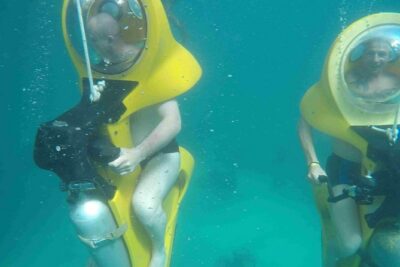 ★ 4.2Scuba Doo – Diving Scooters in Punta CanaFrom $55283 reviews
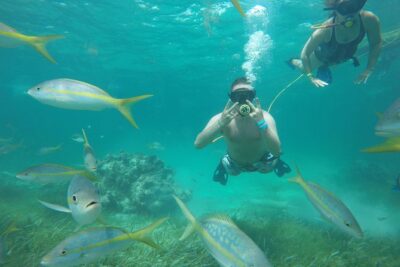 ★ 5.03 ADVENTURES: Sailing Catamaran Cruise – Hooka Diving – SnorkelingFrom $105162 reviews
 ★ 4.5PACKAGE DEAL Catamaran- Snorkeling – Hooka Diving – ParasailingFrom $140103 reviews
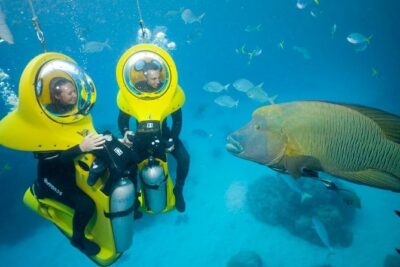 ★ 4.0Scuba Doo Underwater Scooter in Punta Cana (Half Day)From $7584 reviews
 ★ 4.1Scubadoo Ocean Exploration Diving AdventureFrom $7670 reviews
 ★ 3.5Full-Day Catalina Island Scuba Diving Tour from Punta CanaFrom $13037 reviews
 ★ 4.2Scuba Doo Adventure with Round-Trip TransferFrom $5935 reviews
Browse the lists this tour appears in